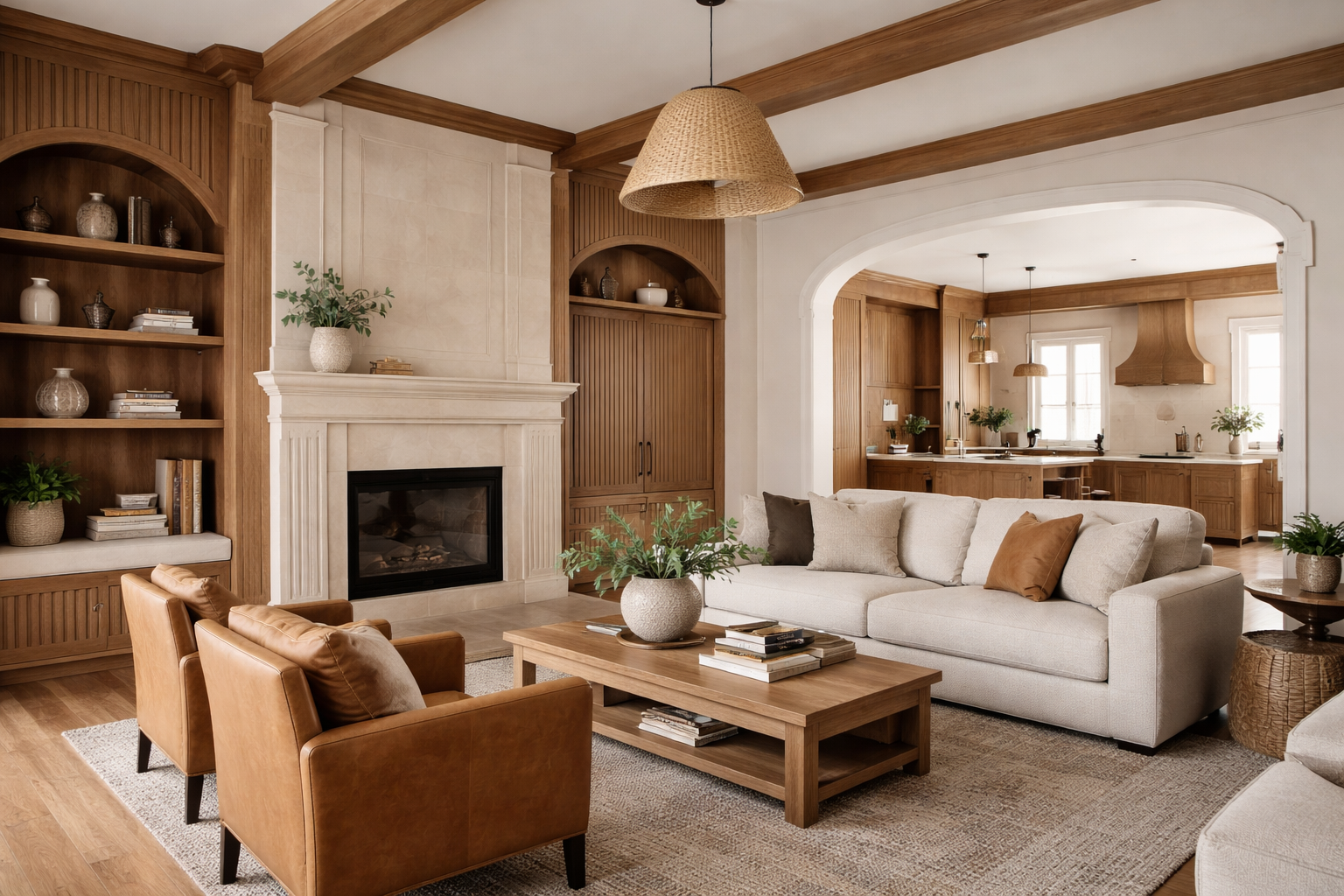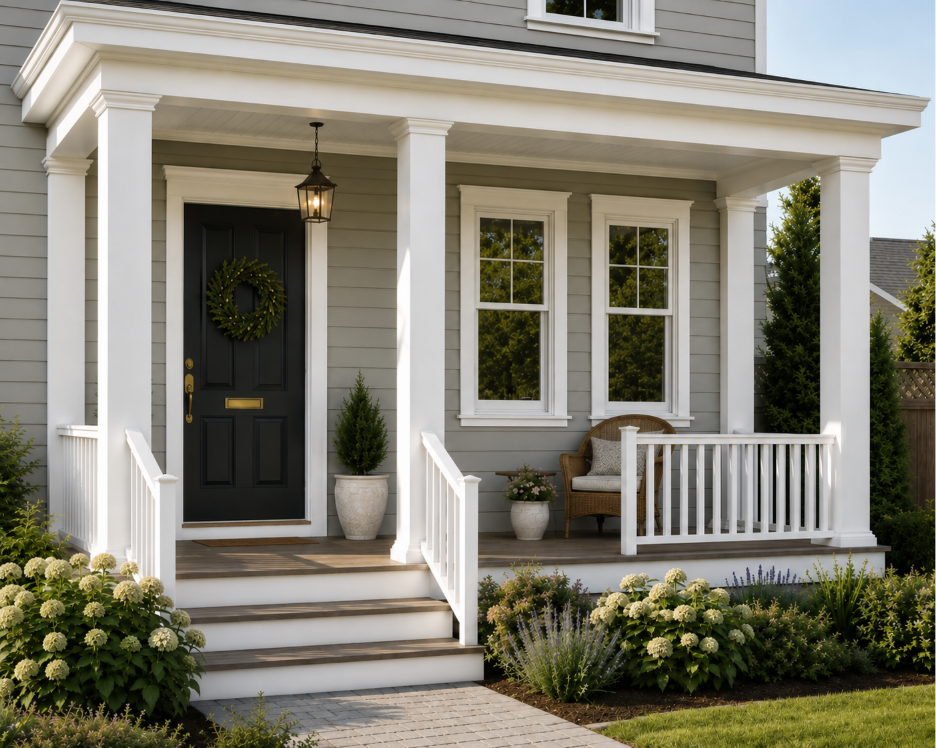
A porch is the first thing people see when they approach your home, and it sets the tone for everything behind it. Yet porches are often left plain: bare posts, untrimmed doors and windows, and railings that do the job but add little character. The good news is that a porch upgrade doesn’t require tearing anything down or starting from scratch. With the right trim and architectural components, you can transform a flat, unfinished entry into something that looks intentional, welcoming, and custom.
Before buying anything, it helps to look at your porch as a whole, rather than a collection of separate parts. The most polished exteriors work because their elements relate to one another: the casing around a door coordinates with the crosshead above it, the columns echo the proportions of the pilasters, and the railing style suits the overall look of the home.
We will walkthrough how to approach a porch upgrade from planning to finish, covering the six components that do the most to elevate a porch: casing, crossheads, pilasters, shutters, columns, and balustrades. Whether you’re a homeowner tackling a weekend project or a contractor putting together a trim package for a client, the same principles apply.
Frame Doors and Windows With Casing
Casing is one of the simplest upgrades and often the best place to start, because it immediately makes an opening look deliberate. Casing mouldings frame doors and windows and mark the transition between the wall and the opening, adding depth, shadow, and definition to areas that otherwise read as flat.
EnduraThane casing is made from high-density urethane, which captures crisp detail resembling traditional plaster or wood millwork while staying lightweight and easy to handle. That combination is why casing appeals to contractors and DIYers alike: you get the look of heavier millwork without the weight or the fussy installation. Casing can run around doors and windows, along walls or ceilings, or as part of a larger trim package that ties the whole porch together.
Casing comes in a range of profiles, widths, projections, and lengths, you can match anything from a simple transitional home to a more decorative traditional design. Factory-primed options give you a paint-ready surface, so you can finish the trim to coordinate with siding, shutters, doors, and surrounding details. If you do nothing else on this list, adding or upgrading casing will make every opening on the porch feel more considered.
Add Weight Above Openings With Crossheads
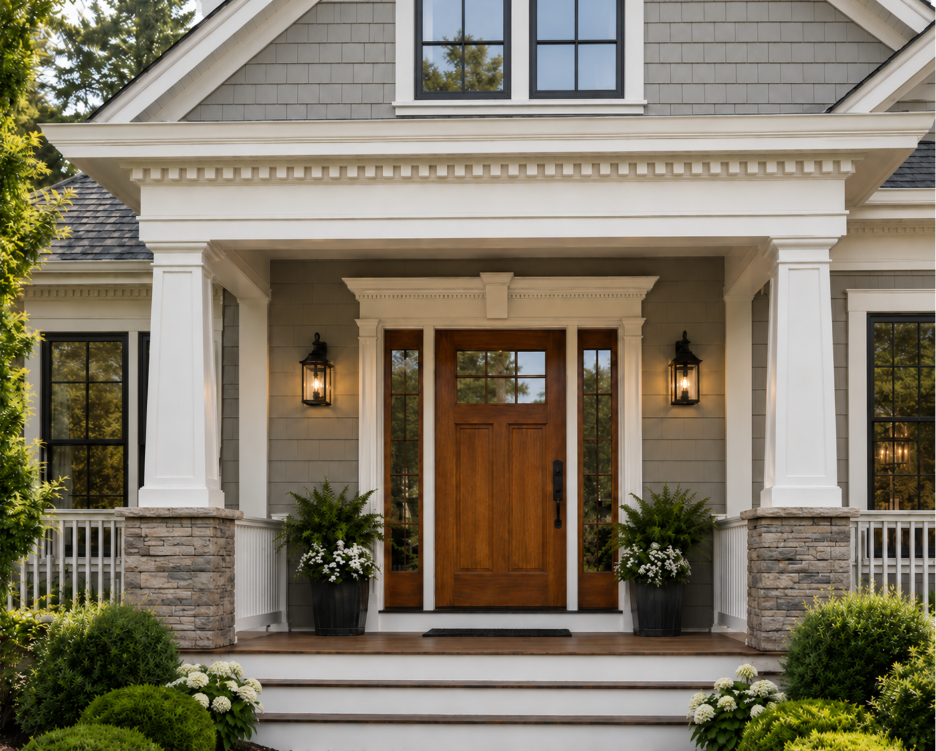
Once your openings are cased, a crosshead builds on that foundation. A crosshead is a decorative trim piece that sits above a door or window, adding visual weight to the top of the opening and giving it a historic-inspired, custom-millwork look. Where a bare doorway can feel flat, a crosshead introduces depth and shadow that makes the entry feel finished.
Crossheads are commonly made from high-density urethane, so detailed profiles mimic wood or plaster while staying light enough to install without a crew. The material is durable, moisture resistant, and factory primed, which means each piece is ready to paint and can be matched to the casing, pilasters, columns, or wall color around it.
Use crossheads above front doors, porch windows, exterior entryways, and cased openings. They come in different heights, projections, widths, and styles, and they pair naturally with pilasters, keystones, and casing. You can keep it subtle with a single crosshead over the front door, or carry the detail across the whole porch for a more dramatic, cohesive result. Either way, the effect is a stronger first impression and a more refined entry.
Frame the Sides With Pilasters
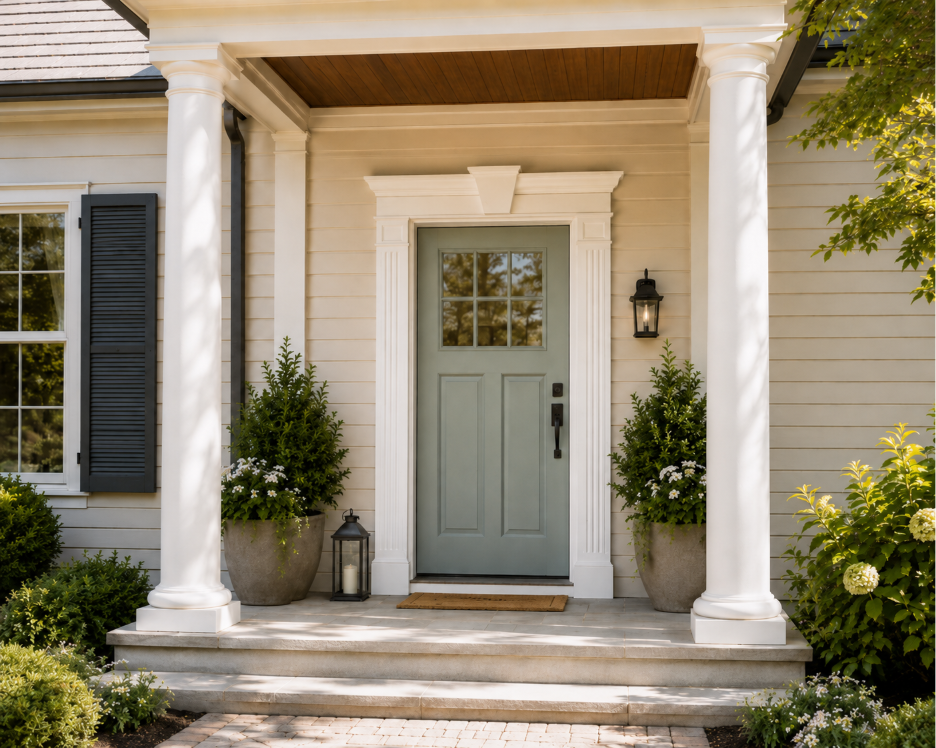
If crossheads dress the top of an opening, pilasters handle the sides. Pilasters are decorative vertical trim features that frame the edges of doors, windows, and entryways, turning a flat opening into a more substantial focal point. They’re especially effective around front doors, porch entries, garage doors, and exterior windows, where they strengthen the architectural frame and improve curb appeal.
Architectural Depot offers pilasters in urethane and PVC, both practical alternatives to traditional wood trim. These materials are lightweight, straightforward to install, and built to resist rot, warping, moisture, and cracking, which matters on a porch that faces changing temperatures and humidity while still needing to look crisp.
Pilasters work on their own as a clean vertical accent, or paired with crossheads, pediments, and casing to create a complete surround. They come in smooth, fluted, and raised-panel profiles, so they can suit styles from colonial to transitional to modern. Factory-primed options make finishing simple, letting you paint them to match the trim, siding, doors, or shutters nearby. Framing your vertical openings this way adds dimension that pulls the whole entry together.
Introduce Rhythm With Shutters
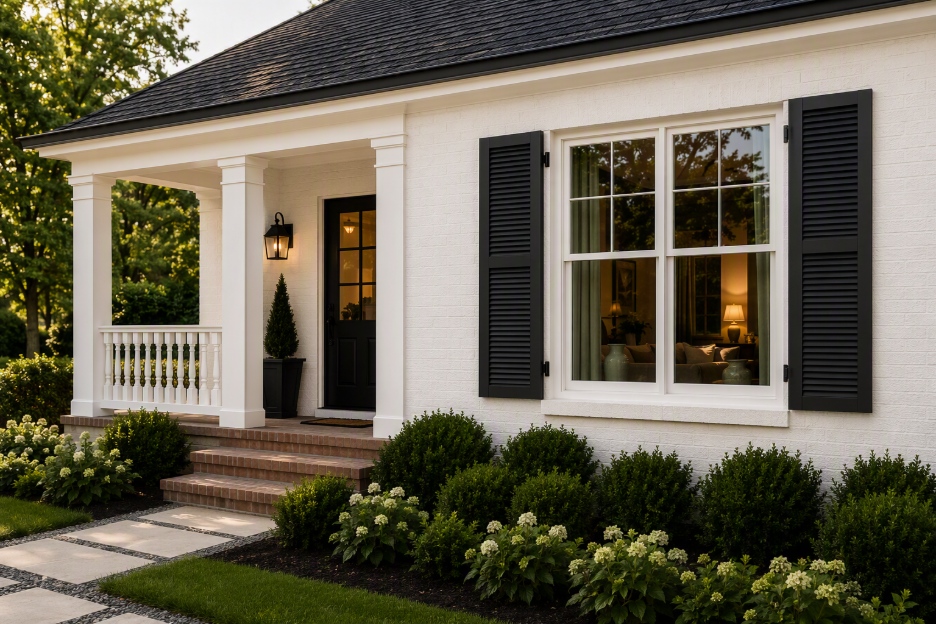
Shutters are an easy way to add curb appeal, color, and character while breaking up large wall surfaces. Positioned beside windows, they give each opening a balanced, intentional look and help the exterior feel more welcoming. Shutters suit a wide range of styles, including traditional, colonial, farmhouse, coastal, craftsman, and modern.
Architectural Depot carries shutters in vinyl, wood, composite, PVC, and aluminum, so you can choose based on appearance, durability, maintenance, and budget. Popular styles include louvered, raised panel, board-and-batten, combination, and Bahama. Vinyl shutters are lightweight, budget friendly, and low maintenance; PVC and composite resist moisture, rot, and warping; wood offers an authentic, traditional look that can be stained or painted for a custom finish.
Available in many sizes and colors, shutters can create contrast, coordinate with existing trim, or reinforce details you’ve already added. Installed beside windows or across the full exterior, they help tie together trim, columns, siding, and doors into one cohesive design. For the visual payoff relative to the effort, shutters are hard to beat.
Anchor the Porch With Columns
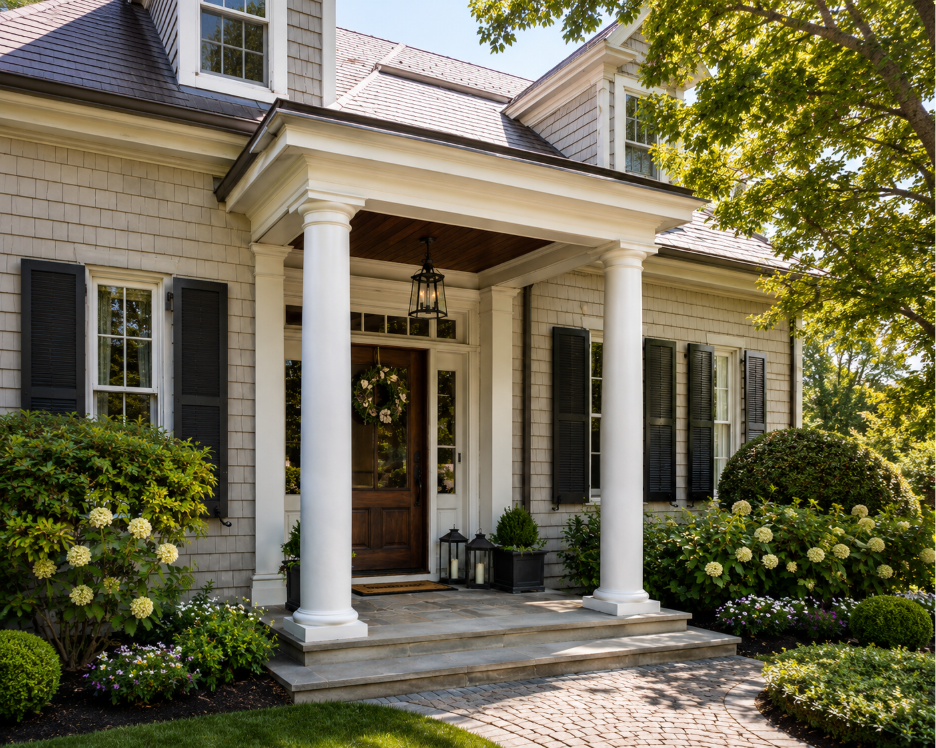
Columns do more than hold up a roof. They frame the entry, create visual rhythm, and give the exterior a more substantial, high-end presence. On a porch, columns can serve as a subtle upgrade or a dramatic focal point, and they work equally well on covered entries, pergolas, and decorative facades. Architectural Depot offers round, square, tapered, non-tapered, fluted, pedestal, porch post, and column wrap styles to match traditional, craftsman, farmhouse, coastal, or modern designs.
Materials include fiberglass, PVC, aluminum, wood, and faux wood polyurethane, each suited to different jobs. This is an important distinction: fiberglass and aluminum can provide true load-bearing support, while PVC and split column wraps are designed to cover an existing structural post for a cleaner appearance. If your porch relies on a column for structural support, confirm you’re choosing a load-rated product rather than a decorative wrap. Many of these materials are built for exterior performance, resisting rot, insects, moisture, rust, and cracking, and paintable surfaces make it easy to coordinate with trim, siding, and railings.
Whether you’re replacing worn posts, wrapping a treated 4×4 or 6×6 for a finished look, or designing a new porch from the ground up, the right column brings structure and intention to the whole elevation. With multiple sizes, materials, and styles available, there’s a fit for both quick refreshes and full builds.
Complete the Railing With a Balustrade
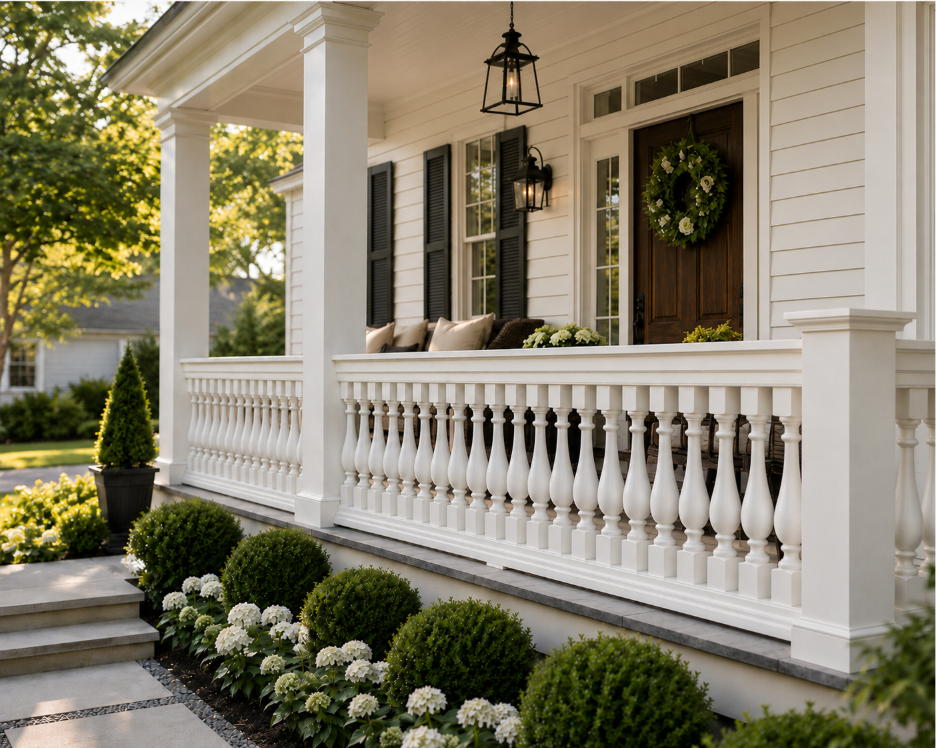
A balustrade is the full railing system that adds safety, structure, and detail to raised porches, decks, balconies, and stairways. It’s more than a handrail: the complete system is made up of the handrail, the balusters, and the base rail working together. The handrail runs across the top and gives the system its clean horizontal line, the balusters are the vertical pieces that add decorative rhythm and fill the open space, and the base rail supports the bottom of the balusters and completes the assembly.
Architectural Depot carries balustrade styles in EnduraThane and FiberThane. The EnduraThane 500 series is made from high-density polyurethane and is rot free, insect resistant, and low maintenance, with baluster designs including Amy, Winford, Lincoln, Square, and Calico. FiberThane balustrade combines fiberglass strength with polyurethane detail for lightweight durability.
Because a balustrade addresses both function and appearance, it’s a fitting final step. It makes a raised porch safer and more defined while adding the architectural character that pulls the earlier upgrades together into a finished whole.
Putting It All Together
You don’t have to tackle all six components at once. A porch upgrade works just as well in stages: start with casing and a crosshead over the front door, add pilasters and shutters when you’re ready, then move to columns and a balustrade as budget and time allow. These pieces are designed to coordinate, each step builds on the last rather than working against it.
The thread running through all of it is intention. When openings are framed, posts are dressed, windows are accented, and railings are finished to match, a porch stops looking like a collection of parts and starts looking designed. That’s the difference a thoughtful upgrade makes, and it’s well within reach whether you’re doing the work yourself or doing the specs for a client.
Ready to start? Browse casing, crossheads, pilasters, shutters, columns, and balustrades at Architectural Depot, and build a trim package that gives your porch a more polished,